The Filter Authority Protection Ladder
From maximum practical protection to simple everyday taste improvement
Over the years, working with filtration equipment and speaking to people from all walks of life, I have learned that everyone is different. Some people say, "Give me everything for every possibility." Others just want their water to taste better. Most fall somewhere in between.
So I have put together this guide to cover the full range — from maximum practical protection to basic taste improvement. It is here to help you understand what each level is for, what it can and cannot do, and where different systems fit.
No single filter does everything. Different concerns need different tools, and in some homes that may mean a simple carbon filter, while in others it may mean a more advanced setup with pre-filtration, reverse osmosis, UV, softening, or pressure support.
Where useful, I have included links to products and deeper guides so you can explore the options for yourself.
Not sure where to start?
If you are not sure which level suits your household, our Filter Finder quiz takes about 60 seconds and will point you in the right direction. You can also check your local water quality to understand what is in your water before deciding.
The 6 Protection Levels at a Glance
Each level builds on the one before it. You do not necessarily need to start at Level 1 and work up — many households jump straight to the level that matches their concerns. The table below gives you a quick overview before we go into detail.
| Level | What It Is | Main Benefit |
|---|---|---|
| 1 | Jug filter | Better taste |
| 2 | Countertop filter | Better taste + convenience |
| 3 | Under-sink carbon block | Contaminant reduction |
| 4 | Reverse osmosis | Broadest single-tap protection |
| 5 | Multi-barrier system | Whole-house treatment |
| 6 | Private supply treatment | Non-mains water safety |
Level 1 — Simple Taste Improvement
Jug filters and basic tap attachments
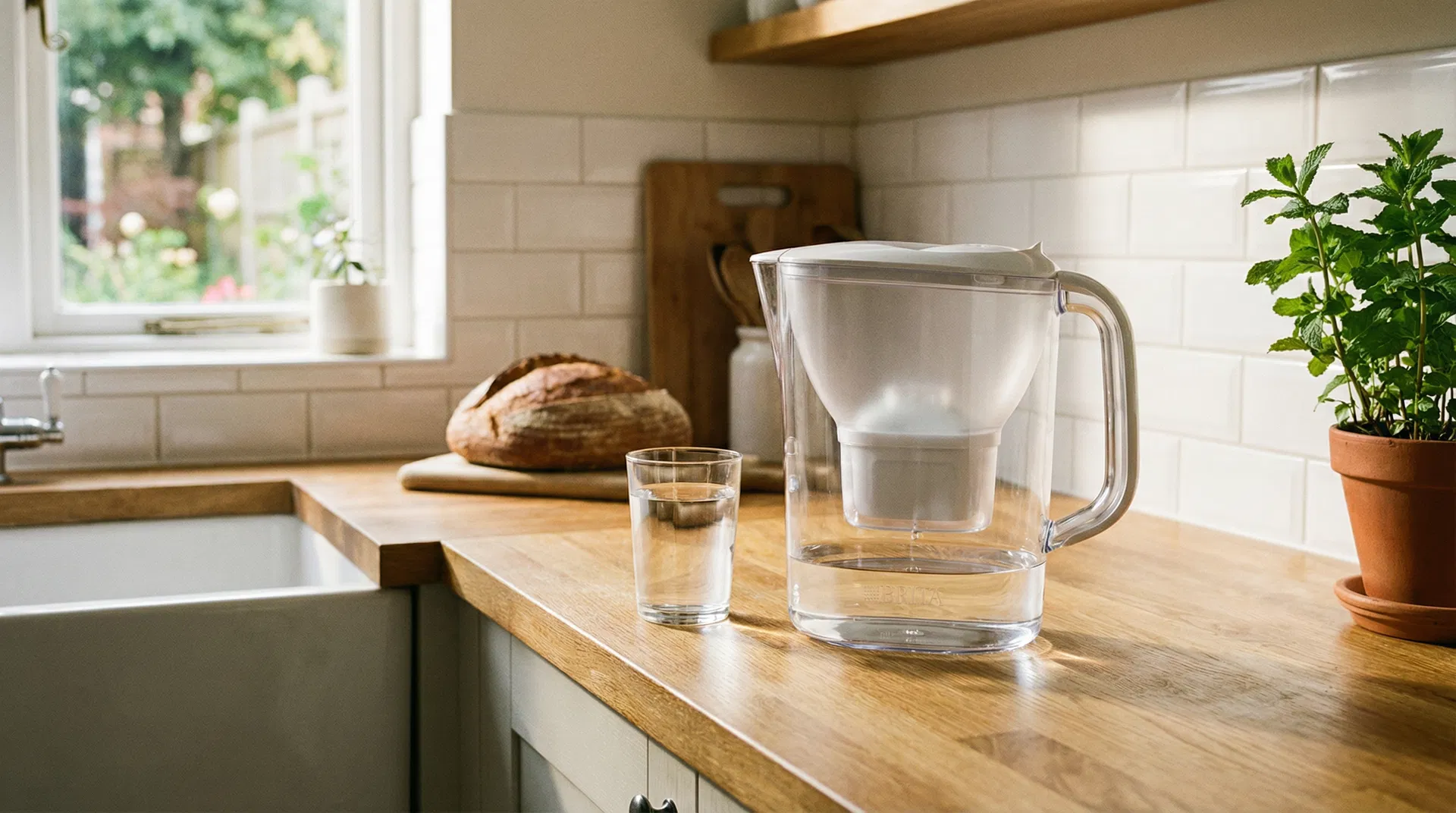
Best for: People who mainly want better-tasting water for drinking and making tea or coffee.
What it does
- Reduces chlorine taste and odour
- Improves the general taste of tap water
- Some models reduce a small amount of limescale
What it does not do
- Does not reduce lead, PFAS, heavy metals, or microplastics
- Does not reduce dissolved solids (TDS)
- Does not provide broad contaminant protection
- Filter cartridges need replacing regularly (typically every 4-8 weeks)
Typical Systems
Standard jug filters, basic tap-mounted filters.
Keith's Take
If your only concern is that your water tastes a bit of chlorine or you want a cleaner cup of tea, a jug filter is a perfectly reasonable starting point. Just be honest with yourself about what it does and does not do — it is a taste filter, not a protection system.
Level 2 — Everyday Kitchen-Tap Filtering
Countertop carbon filters and tap-integrated systems
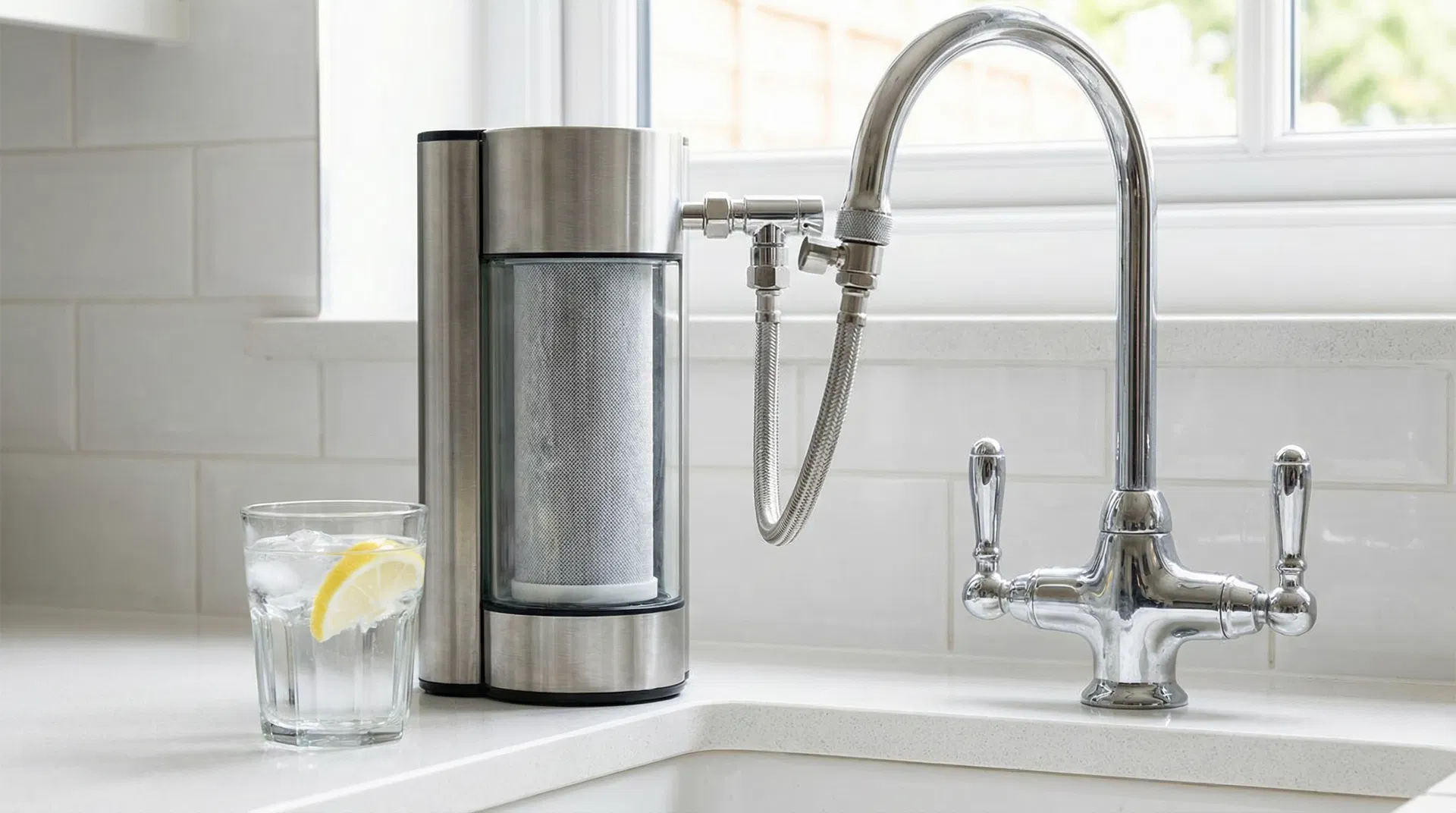
Best for: Households wanting a step up from a jug filter without any plumbing work. Good for renters.
What it does
- Reduces chlorine taste and odour more effectively than a jug
- Some models reduce a degree of lead and sediment
- Filters water on demand — no waiting for a jug to fill
- No permanent installation required
What it does not do
- Does not provide certified lead or PFAS reduction unless specifically rated
- Does not reduce dissolved solids (TDS) or fluoride
- Takes up counter space
- Flow rate may be slower than an unfiltered tap
Typical Systems
Countertop carbon block units, gravity-fed systems, tap-mounted filters with carbon cartridges.
Keith's Take
This is where many people land — especially renters or anyone who does not want to drill holes or modify plumbing. A good countertop carbon filter gives you noticeably better water than a jug, and some models carry NSF 42 certification for chlorine reduction. Just check what the filter is actually certified to do before you buy.
Level 3 — Broader Under-Sink Protection
Dedicated under-sink carbon block and multi-stage filters
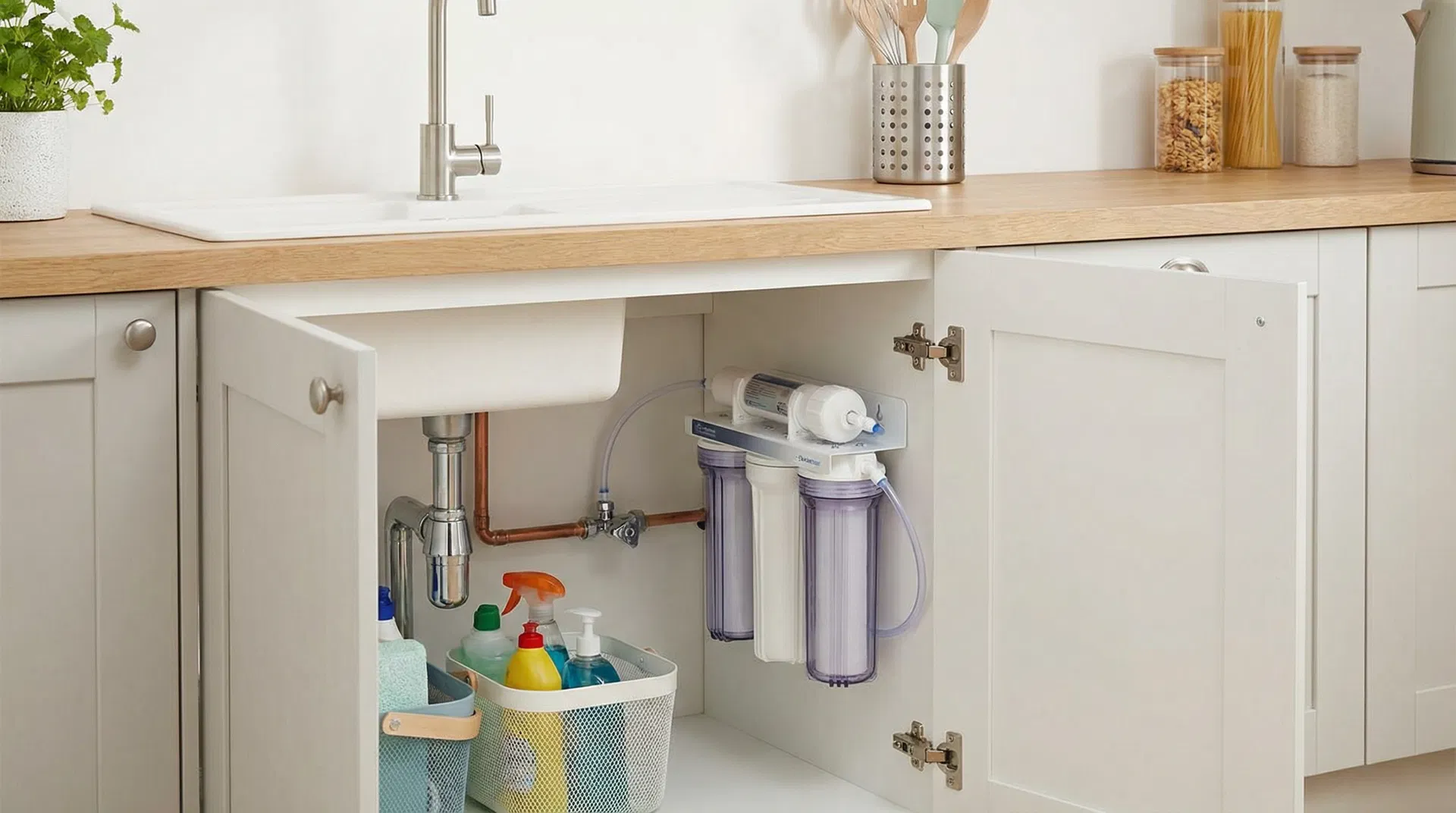
Best for: Households wanting meaningful contaminant reduction from a single kitchen tap — especially in areas with older plumbing or known water quality concerns.
What it does
- Reduces chlorine, chloramine, and improves taste
- Good carbon block filters can reduce lead, some PFAS, and some microplastics
- Delivers filtered water through a dedicated tap on the countertop
- Hidden under the sink — no counter space used
- Higher flow rate than jug or countertop filters
What it does not do
- Does not reduce dissolved solids (TDS), fluoride, or nitrates
- Does not soften water or prevent limescale
- Requires basic plumbing installation (drilling a hole for the tap)
- Not suitable for private water supplies with biological contamination risk
Typical Systems
Under-sink carbon block filters, dual-stage or triple-stage cartridge systems with a dedicated filter tap.
Keith's Take
This is the level I recommend most often for UK households on mains water. A well-chosen under-sink carbon block filter — particularly one with NSF 53 certification — addresses the concerns most people actually have: chlorine taste, lead from older pipes, and a degree of PFAS reduction. It is a solid, practical step that does not overcomplicate things.
Level 4 — Advanced Reverse Osmosis
Under-sink RO systems for the broadest single-tap protection
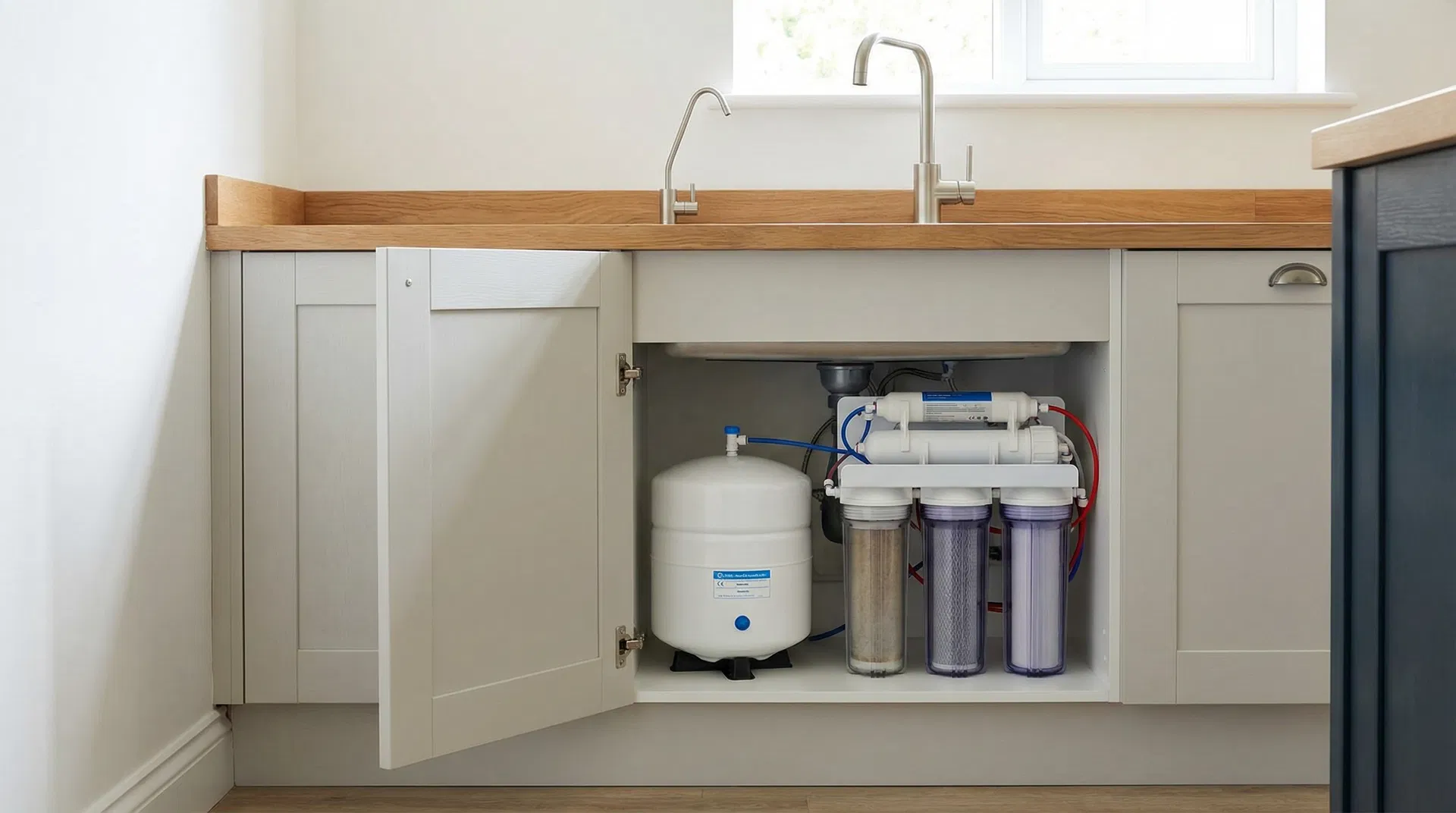
Best for: Households wanting the broadest practical contaminant reduction from a single drinking water tap. Particularly relevant for families with babies, immunocompromised members, or anyone who simply wants the highest level of single-tap protection available.
What it does
- Reduces the vast majority of dissolved contaminants including heavy metals, PFAS, fluoride, nitrates, and TDS
- Provides the broadest single-tap contaminant reduction available for domestic use
- Most systems include pre-filters (sediment + carbon) and a post-filter for taste
- Delivers very pure water through a dedicated tap
What it does not do
- Does not filter the whole house — only the dedicated RO tap
- Does not soften water for appliances, showers, or baths
- Produces waste water during the purging process (modern systems are increasingly efficient)
- Requires adequate water pressure — typically 40–60 psi minimum
- Removes beneficial minerals along with contaminants (some systems include a remineralisation stage)
Typical Systems
Under-sink reverse osmosis units (tankless or with a pressurised storage tank), typically 4–7 filtration stages.
Please Note: Water Pressure Requirement
All filtration systems have a minimum water pressure requirement. Reverse osmosis systems typically need 40\u201360 psi for efficient operation. If your pressure is below this, a booster pump must be fitted before the system. You can check your pressure with an inexpensive gauge that connects to an outside tap. Read our Before You Buy guide for more detail.
Keith's Take
This is where my own experience runs deepest — I have worked with RO systems for over 20 years. They are genuinely effective, but they are not magic. You need adequate water pressure, and if your pressure is below 40 psi, you will need a booster pump fitted before the unit. The purging process (waste water) is a normal part of how RO works, and modern systems are far more efficient than older ones. If you are on a water meter, factor in the small additional water cost. For families with babies or anyone wanting the broadest practical protection from a single tap, this is the level I would look at seriously.
Level 5 — Maximum Practical Domestic Protection
Multi-barrier systems combining softening, filtration, and UV
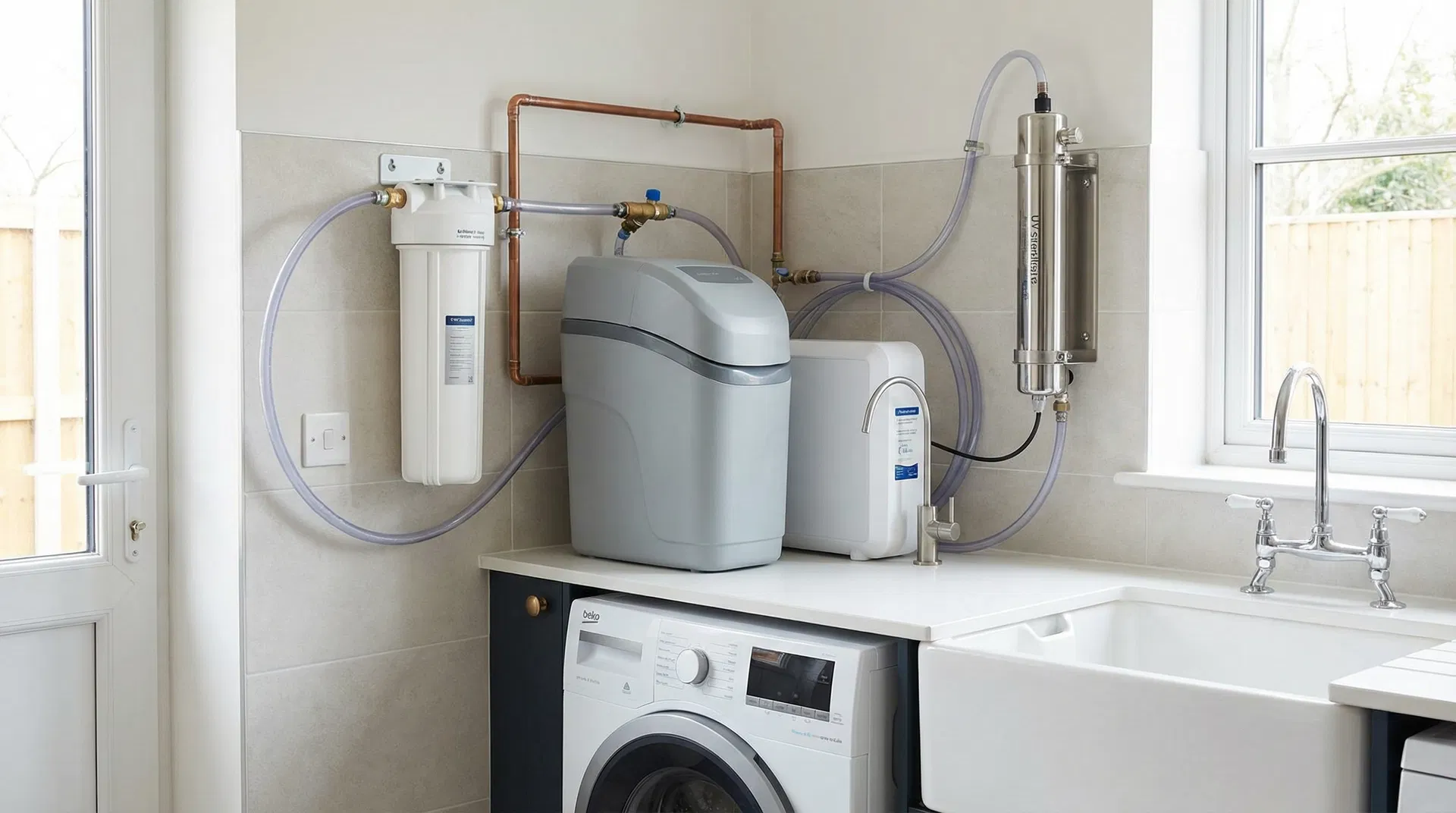
Best for: Households wanting whole-property water treatment — protecting appliances from limescale, providing filtered drinking water, and addressing multiple concerns at once. Common in hard water areas with older plumbing.
What it does
- Addresses multiple concerns simultaneously: taste, contaminants, hardness, and biological risk
- Whole-house sediment pre-filtration protects all taps and appliances
- Water softener reduces limescale damage to boilers, washing machines, and showers
- Under-sink RO or carbon block provides dedicated drinking water filtration
- UV sterilisation provides an additional barrier against bacteria and viruses
What it does not do
- Does not come as a single unit — it is a combination of separate systems working together
- Requires professional installation and plumbing modifications
- Higher upfront cost and ongoing maintenance across multiple components
- Requires adequate space (utility room, garage, or under-stairs cupboard)
- Water softener requires regular salt top-ups
Typical Systems
A combination of: whole-house sediment pre-filter, ion-exchange water softener, under-sink RO or carbon block filter, and optionally a UV steriliser.
Please Note: Water Pressure Requirement
All filtration systems have a minimum water pressure requirement. Reverse osmosis systems typically need 40\u201360 psi for efficient operation. If your pressure is below this, a booster pump must be fitted before the system. You can check your pressure with an inexpensive gauge that connects to an outside tap. Read our Before You Buy guide for more detail.
Keith's Take
This is the level where you are treating water as a whole-house concern, not just a single tap. It is most common in hard water areas where limescale is damaging appliances and the household also wants clean drinking water. It is not cheap, and it does require space and professional installation. But for the right household, it is the most comprehensive practical solution available. I would always recommend getting a water test done first so you know exactly what you are dealing with before investing at this level.
Level 6 — Non-Mains, Private Supply & Biological Risk Protection
Borehole, well water, rainwater harvesting, and rural private supplies
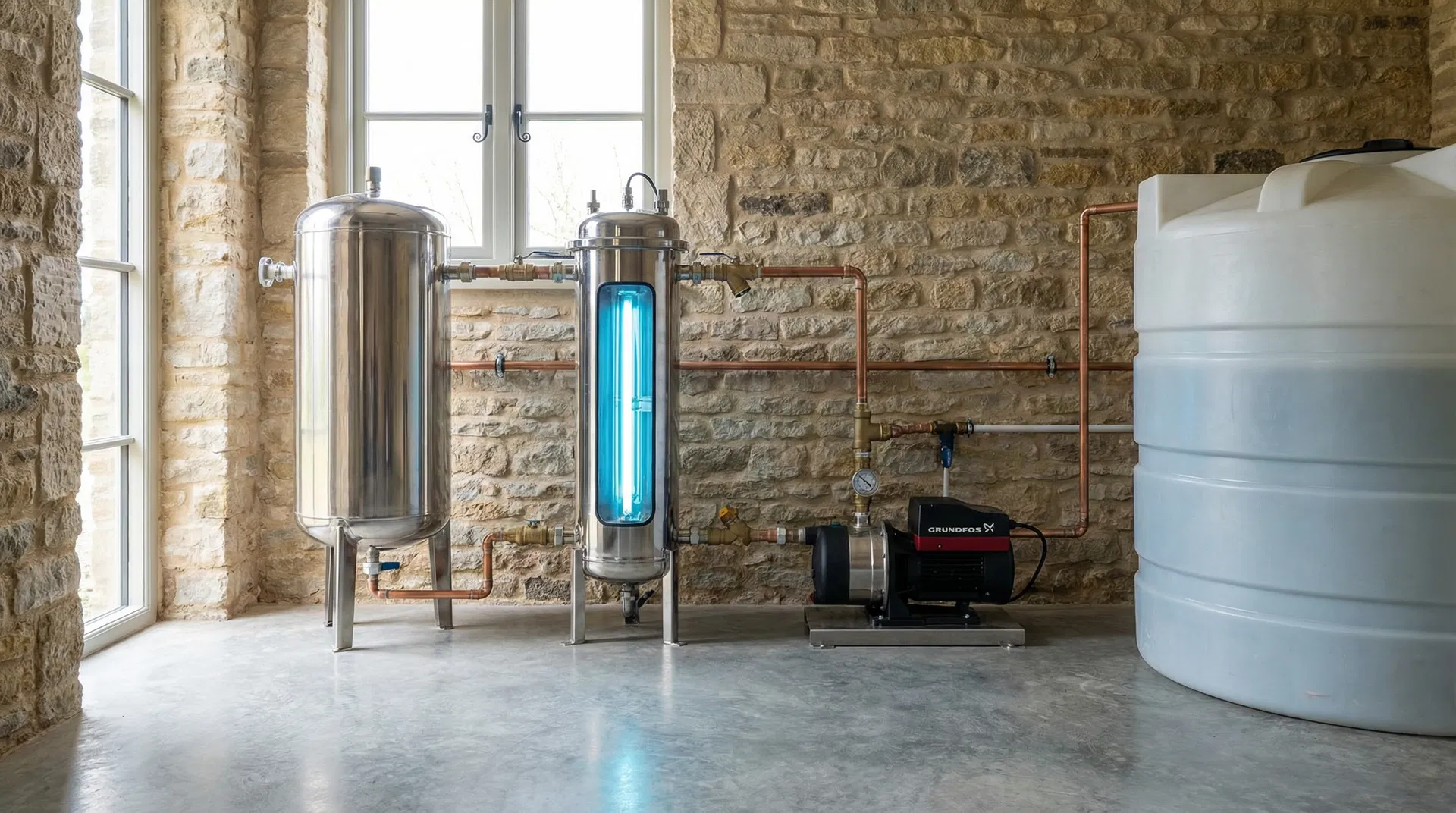
Best for: Properties not connected to mains water — boreholes, wells, springs, rainwater harvesting systems. Also relevant for rural properties with known biological contamination risk.
What it does
- Sediment pre-filtration removes particles, silt, and debris from the raw water source
- UV sterilisation neutralises bacteria, viruses, and other microorganisms
- Pressure systems ensure adequate flow throughout the property
- RO or advanced filtration can be added for chemical contaminant reduction
- Storage tanks provide a buffer for low-yield sources
What it does not do
- Does not follow the same pattern as mains water filtration — every private supply is different
- Requires professional water testing before any system is designed
- UV sterilisation only works on clear water — sediment must be removed first
- Ongoing monitoring and maintenance is essential, not optional
- May require local authority approval depending on the supply type
Typical Systems
A combination of: sediment pre-filtration (often multi-stage), UV sterilisation, pressure pump, storage tank, and optionally RO or carbon filtration for chemical concerns.
Please Note: Water Pressure Requirement
All filtration systems have a minimum water pressure requirement. Reverse osmosis systems typically need 40\u201360 psi for efficient operation. If your pressure is below this, a booster pump must be fitted before the system. You can check your pressure with an inexpensive gauge that connects to an outside tap. Read our Before You Buy guide for more detail.
Keith's Take
This is a different world from mains water filtration. If you are on a private supply — a borehole, well, spring, or rainwater system — you are responsible for your own water quality. That means testing first, designing a system around the results, and maintaining it properly. UV sterilisation is essential for any supply where biological contamination is a possibility, but it only works if the water reaching the UV lamp is already clear. Sediment pre-filtration is not optional in this scenario. If you are unsure, get a professional water test done and speak to a specialist installer. This is not a DIY job.
How to Choose the Right Level
There is no single correct answer. The right level depends on your household's specific concerns, your water supply, your budget, and how much maintenance you are willing to do. Here are some practical starting points:
If your main concern is taste
Start at Level 1 or 2. A jug filter or countertop unit will make a noticeable difference to chlorine taste without any installation.
If you want meaningful contaminant reduction
Look at Level 3 (under-sink carbon block) or Level 4 (reverse osmosis). These are the levels where certified filtration begins to address lead, PFAS, and other concerns beyond taste.
If you want whole-house protection
Level 5 combines multiple systems to treat water throughout the property. This is most common in hard water areas where limescale is also a concern.
If you are on a private water supply
Level 6 is specifically for non-mains water. Get a professional water test done first — every private supply is different, and the treatment needs to match the source.
Still not sure? Our Filter Finder quiz asks a few simple questions about your household and points you toward the right level. It takes about 60 seconds.
A Note on Certifications
At every level above Level 1, it is worth checking whether the filter you are considering carries an independent certification for the specific contaminants it claims to reduce. The most widely recognised standards are NSF 42 (taste and odour), NSF 53 (health-related contaminants like lead), and NSF 58 (reverse osmosis performance). A filter that carries one of these certifications has been independently tested — one that does not may still work, but you are relying on the manufacturer's word alone.
For a full explanation of what each certification means and how to verify a filter's claims, see our Water Filter Certifications Explained guide.
Looking for portable or travel filtration?
This guide covers fixed home filtration systems. If you are looking for portable filtration for travel, hiking, or emergency preparedness, those are different tools for different situations. See our Travel Water Filters UK and Survival Water Filtration Guide for portable options.
Frequently Asked Questions
What level of water filtration do I need at home?
It depends on your concerns. If you simply want better-tasting water, a jug filter or countertop unit (Levels 1-2) may be enough. If you want broader protection against chlorine, lead, PFAS, or microplastics, an under-sink carbon block or reverse osmosis system (Levels 3-4) is more appropriate. Properties on private water supplies may need UV sterilisation and sediment pre-filtration (Level 6).
Do I need a reverse osmosis system for UK mains water?
Not necessarily. UK mains water is legally safe to drink. A reverse osmosis system (Level 4) provides the broadest contaminant reduction for a single tap, but many households find a good carbon block filter (Level 3) addresses their main concerns — chlorine taste, lead from older pipes, and some PFAS reduction — at a lower cost and with no water waste.
What is the difference between a carbon filter and reverse osmosis?
A carbon block filter reduces chlorine, some lead, some PFAS, and improves taste. It does not reduce dissolved solids (TDS), fluoride, or nitrates. A reverse osmosis system forces water through a semi-permeable membrane that reduces the vast majority of dissolved contaminants including TDS, heavy metals, PFAS, and fluoride. RO systems require adequate water pressure (typically 40-60 psi) and produce some waste water during the purging process.
Do I need a water pressure check before installing an RO system?
Yes. All reverse osmosis systems require a minimum water pressure to operate efficiently — typically around 40-60 psi. If your pressure is below this, a booster pump must be fitted before the RO unit. You can check your water pressure with an inexpensive pressure gauge that connects to an outside tap. This is an essential step before purchasing any RO system.
Related Reading
Best Water Filters UK 2026
Our top-rated filters tested and compared
Before You Buy
Essential checks before purchasing any filter
Filter Types Explained
Carbon, RO, UV, ceramic — what each type does
Is UK Tap Water Safe?
What the regulations say and what they leave out
Certifications Explained
NSF 42, 53, 401, P473 and WRAS decoded
Complete Multi-Barrier Guide
The definitive guide to multi-barrier systems
All information in this guide was correct at the time of writing (June 2026). Filter Authority reviews its technical and legislative content periodically to keep readers informed of changes. Product recommendations are based on independent research, verified certifications, and real-world experience. Where we link to products, some links may be affiliate links — this does not affect our recommendations or the price you pay. Our full methodology is explained on our Methodology and How We Verify pages.